Recycling and Sustainability for Commercial Waste Swiss Cottage
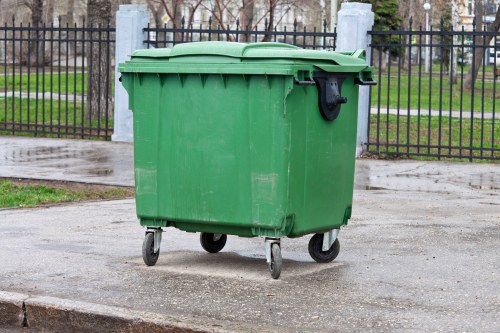 Commercial Waste Swiss Cottage is committed to an eco-friendly waste disposal area that supports local businesses, protects the urban environment and creates a robust sustainable rubbish area for the neighbourhood. This page explains our objectives, the practical steps we take to increase reuse and recycling, and how we work with local transfer stations, charities and low-emission logistics providers to deliver measurable environmental benefits across Swiss Cottage and the surrounding boroughs.
We have set a clear recycling percentage target for our services: a 70% recycling and reuse target for commercial streams by 2030, with an interim milestone of 55% by 2026. This target covers mixed commercial waste, segregated recyclable streams and reuse routes for furniture, textiles and electronic items. The boroughs in north London encourage separate collection of food waste, dry recyclables and glass, and our approach aligns with those local schemes to ensure businesses in Swiss Cottage contribute to borough-wide waste separation plans.
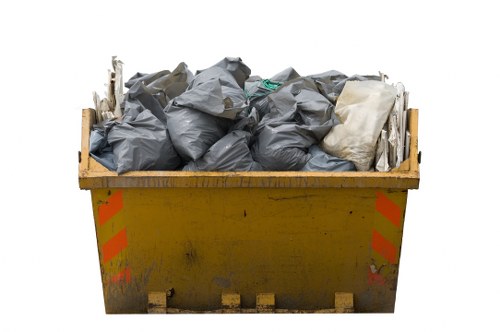 A properly managed sustainable rubbish area starts with the right infrastructure. We use segregated containers for paper and card, glass, plastics, food waste and residual waste; secure bays for WEEE (electricals) and dedicated areas for bulky or construction materials. Reducing contamination at source increases the proportion of material that can be passed to recycling and reuse networks, which in turn helps us meet the Commercial Waste Swiss Cottage recycling targets with accuracy and transparency.
Local transfer stations and partnerships that scale impact
To keep haul distances short and emissions low, we consolidate collections and route materials through local transfer stations serving Camden and neighbouring boroughs. These facilities act as efficient hubs where recyclables are sorted, bulked and forwarded to reprocessing centres. By using nearby transfer stations rather than long-distance tip runs, we reduce vehicle miles, lower carbon intensity and accelerate material flows into reuse and recycling markets.
 We prioritise partnerships with charities and reuse organisations to divert functional goods from landfill. Our network includes local charities and social enterprises that specialise in furniture refurbishment, textile reuse and electronics refurbishment. When businesses separate items at source, working chairs, office furniture, functioning IT equipment and surplus stock can be diverted directly to community projects, training programmes and social enterprises rather than being treated as waste.
How this translates into daily activity in a typical Swiss Cottage commercial setting: operators are given clear, labelled containers, staff training, and regular collection schedules. We also supply digital reporting so clients can see recycling rates and tonnages. Transparency drives improvement — with monthly reports we can identify contamination hot-spots and collaborate with tenants to increase capture rates for high-value streams like cardboard and WEEE.
Operational measures: low-carbon vans, route optimisation and community benefit
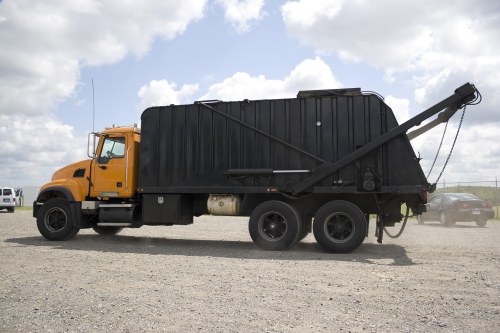
Our fleet strategy focuses on low-emission logistics. We deploy a mix of electric cargo vans, plug-in hybrids and Euro 6 low-emission vehicles for heavier loads. These low-carbon vans reduce local air pollution in Swiss Cottage high streets and enable quieter, more frequent collections where needed. Route optimisation software minimises vehicle miles and empty running, contributing directly to the carbon savings associated with each tonne of material collected.
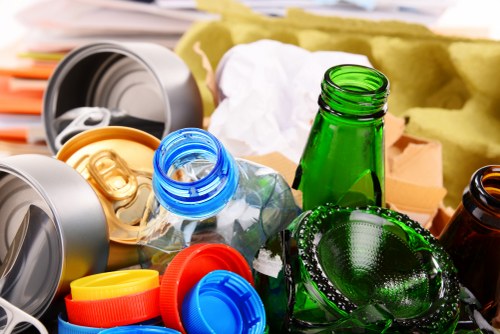 In practical terms, commercial premises benefit from a coordinated service that links on-site segregation with transfer station consolidation and onward processing. We also operate dedicated collection days for textiles, WEEE and bulky items, ensuring that reusable goods reach charity partners and certified recyclers. Carbon accounting is integrated into our client reports so businesses can track progress against the recycling percentage target and their broader sustainability commitments.
 The sustainability programme for Swiss Cottage commercial waste includes training, audits and improvement plans designed to protect the environment and add value to local communities. By combining local transfer station logistics, charity partnerships, targeted recycling streams and a low-emission vehicle fleet, we create an effective, resilient system for a cleaner high street and a stronger circular economy. Join the movement toward a greener, more sustainable commercial waste service in Swiss Cottage — where measurable recycling targets, practical on-the-ground solutions and community partnerships make a real difference.
Key features at a glance:
- Recycling percentage target: 70% by 2030, 55% interim by 2026.
- Local transfer stations: consolidation hubs in Camden and neighbouring boroughs to reduce haul distances.
- Charity partnerships: reuse routes for furniture, textiles and electronics to support the community and reduce landfill.
- Low-carbon vans: electric, hybrid and low-emission vehicles for commercial collections.
- Waste separation: alignment with borough approaches for food, glass, dry recyclables and WEEE.
Our commitment to sustainability for Commercial Waste Swiss Cottage extends beyond compliance: it is about creating a practical, measurable pathway that reduces carbon, supports reuse and demonstrates how an urban commercial area can operate as a sustainable rubbish area. Regular monitoring, community collaboration and investment in low-carbon infrastructure are the pillars that make this achievable.
