Commercial Waste Swiss Cottage: Health & Safety Policy
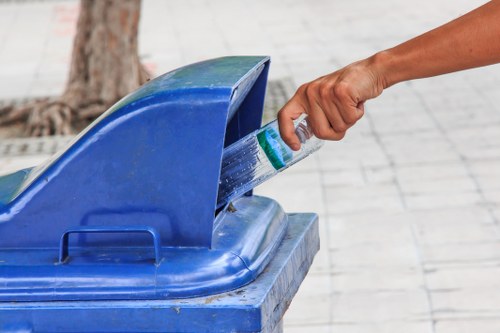 This Health and Safety policy sets out the commitment of our commercial waste operation in Swiss Cottage to protect employees, contractors, visitors and the general public while delivering commercial waste services. Our aim is to maintain safe working systems for rubbish collection, commercial waste removal and on-site waste handling. This document applies across the service area and is designed to be practical, proportionate and focused on risk reduction for a rubbish company working in urban locations.
We are committed to complying with relevant health and safety standards and to continuous improvement. Responsibilities are defined at all levels: management ensures adequate resources and monitoring, supervisors maintain safe operations during commercial rubbish collection, and staff carry out tasks following training and safe systems. All workers are expected to report hazards, near misses and incidents promptly so that lessons can be learned and risks controlled.
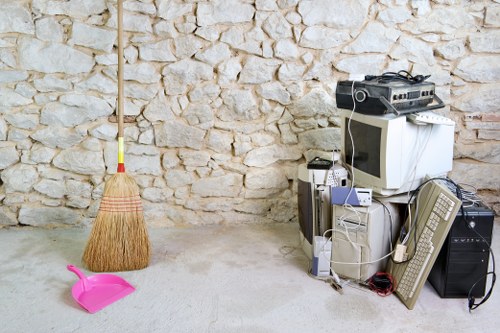 Scope: This policy covers all activities related to business waste management, including scheduled bin collections, skip delivery and removal, on-site waste segregation, transfer to collection vehicles and temporary storage in client premises. It addresses hazards associated with manual handling of rubbish, vehicle movements, handling of mixed commercial waste, sharps and hazardous packaging, and interaction with members of the public during waste service operations.
Risk Management and Operational Controls
Risk assessments are carried out for each routine task and for non-routine operations such as bulky waste removal and site clearances. Identified risks are controlled using a hierarchy of measures: elimination, substitution, engineering controls, administrative controls and personal protective equipment (PPE). Controls for waste collection teams include:
- Safe manual handling techniques and use of mechanical aids to reduce musculoskeletal injury during rubbish handling.
- Traffic management and vehicle safety procedures to protect staff and third parties during commercial waste collection rounds.
- Provision and mandatory use of appropriate PPE, including gloves, hi-vis, eye protection and respiratory protection where needed for dust or airborne contaminants.
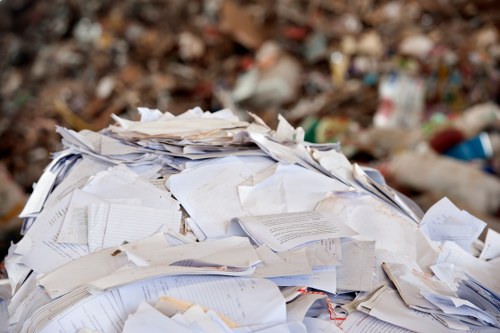 We maintain robust procedures for dealing with hazardous or potentially infectious waste found mixed with commercial rubbish. Staff are trained to segregate and isolate suspect items, follow containment procedures and notify supervisors. The waste transfer process is controlled to prevent spills, cross-contamination and exposure to biological or chemical hazards.
Training, Competence and Communication
All personnel involved in commercial waste services receive induction and ongoing training appropriate to their role. Training covers safe rubbish collection practices, manual handling, vehicle safety, site-specific risks and emergency procedures. Competence is assessed through observation and records are maintained.
Communication of health and safety information is achieved through toolbox talks, written instructions and visual signage at depots and on vehicles. Staff briefings before each shift highlight specific risks for the day and any controls required for particular client sites. Supervisors are expected to reinforce safe behaviours and to take immediate action where unsafe acts or conditions are observed.
 Incident reporting and investigation procedures ensure that any accident, injury or near miss during rubbish pickup and waste handling is recorded, investigated and used as a basis for preventive measures. Corrective actions are tracked to completion and shared across the operation to reduce recurrence.
Maintenance of equipment and vehicles used for commercial rubbish collection is critical to safety. Scheduled checks, defect reporting and prompt repairs reduce the likelihood of mechanical failure leading to injury or spill. Waste containers, lifting equipment and safety devices are inspected and maintained in line with manufacturers' guidance and company standards.
 Our commitment extends to environmental protection as part of safe operations: spill kits, containment procedures and waste transfer records help prevent pollution incidents during commercial waste transfer and rubbish disposal activities. Records of training, risk assessments and maintenance form a documented system to support continual improvement.
Monitoring and review: The policy is reviewed annually and whenever there are significant changes to operations, equipment or legislation. Performance is monitored through safety inspections, audits, incident trends and staff feedback. Senior management will ensure resources are available to implement this policy and to keep health and safety an integral part of delivering reliable commercial waste services in the area.
Signed on behalf of the company: The company leadership endorses this policy and expects all employees, contractors and partners involved in waste management to adhere to its principles. Everyone has a role in maintaining a safe and healthy workplace during rubbish collection, commercial waste removal and related tasks.
Key commitments:
- Provide safe systems of work for commercial waste collection and rubbish services.
- Ensure appropriate training, supervision and competency assessments.
- Maintain equipment and vehicles to a safe standard.
- Investigate incidents and apply lessons learned to prevent recurrence.
- Continually improve health and safety performance across the service area.
By adopting these measures, the business demonstrates a practical and proportionate approach to health and safety for commercial waste operations, balancing operational needs with the protection of people and the environment.
